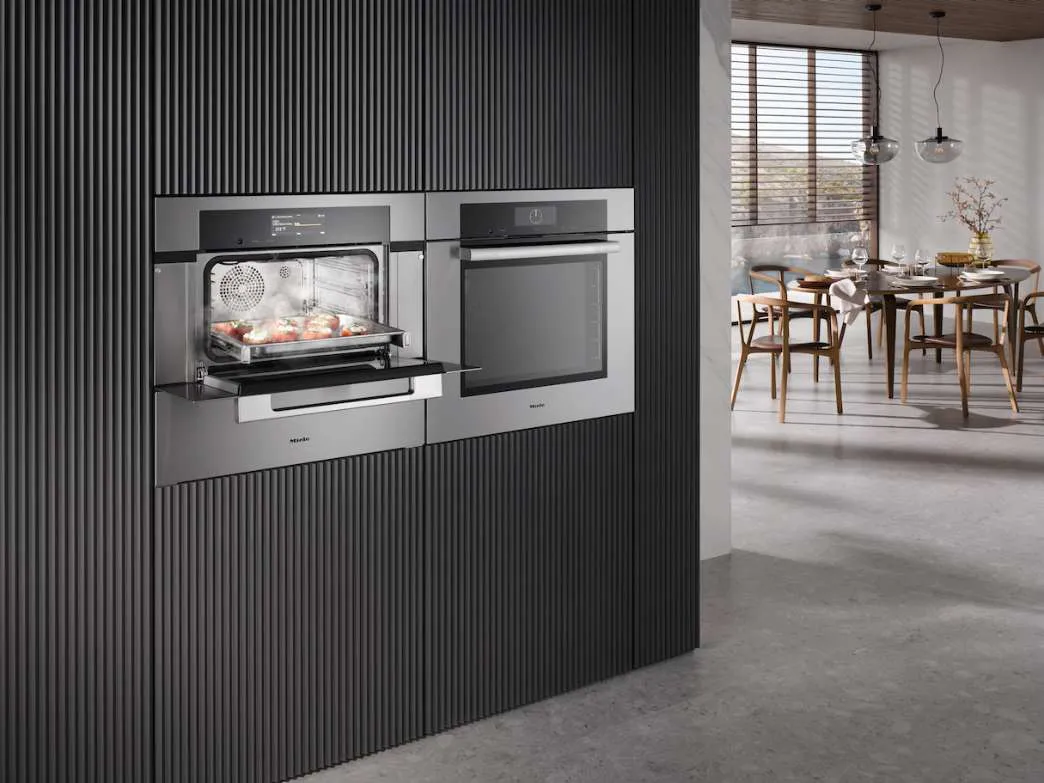
Miele steam ovens offer gentle, precise cooking with excellent moisture control, even heating, and versatile cooking modes. Whether you use your steam oven for vegetables, fish, reheating, combination cooking, or baking support, proper maintenance and timely repairs help preserve performance and cooking results. This guide covers common issues and practical solutions.
Understanding Your Miele Steam Oven
Miele produces several steam cooking appliances for different kitchen setups and cooking habits. Some models are dedicated steam ovens, while others combine steam with conventional oven functions for greater flexibility.
These appliances typically include a water reservoir or plumbed water supply, steam generator, heating elements, control panel, door seal, drain system, temperature sensors, and internal fan systems. Together, these components regulate heat, humidity, and cooking time.
Steam ovens work by generating controlled steam and circulating it through the cavity. In combi models, steam can be used together with dry heat for roasting, baking, and reheating. Because these appliances rely on both water handling and heating systems, problems may come from either side of the machine.
Understanding the difference between a water supply issue, a heating issue, and a control problem makes troubleshooting much easier.
Steam Oven Not Powering On
If the steam oven does not turn on at all, begin with the power supply. Check the circuit breaker and confirm the appliance is receiving power. Built-in cooking appliances often run on dedicated circuits, so even a partial electrical interruption can stop operation completely.
If the display is dark and the oven shows no signs of life, the outlet connection, internal fuse, wiring, or main control board may be at fault.
If the display lights up but the oven does not respond, check whether control lock or child lock has been activated. Some models appear unresponsive when the lock feature is enabled.
Try resetting the unit by switching off power at the breaker for several minutes, then restoring it. This can clear temporary electronic faults and restart the control system.
If the oven recently lost power during cooking and never recovered properly, the issue may involve the control electronics rather than the main power supply.
Steam Not Being Produced
A steam oven that heats but does not generate steam usually has a water supply or steam generation problem. Start by checking the water container if your model uses a refillable reservoir. Make sure it is installed correctly, filled to the proper level, and seated fully in position.
If the tank is empty, improperly inserted, or not detected by the appliance, steam production will not begin normally.
Inspect the water inlet area and the reservoir connection points for mineral buildup or debris. Scale accumulation can restrict water flow into the steam generator.
If the oven is plumbed in directly, verify that the water supply valve is open and that the line is not kinked or blocked.
The steam generator itself may be scaled, restricted, or malfunctioning. In some cases, the appliance may attempt to produce steam but stop early if sensors detect inadequate water flow or improper heating inside the steam system.
A faulty pump, water level sensor, or heating component inside the steam generator can also prevent proper steam output.
Steam Production Is Weak or Inconsistent
Weak steam output often develops gradually. One of the most common causes is mineral buildup from hard water. Over time, scale coats internal passages and reduces efficient steam generation.
If the oven has a descaling program, run it according to the recommended instructions. Regular descaling is one of the most important maintenance tasks for steam cooking appliances.
Low steam output can also result from partial blockage in the water feed system, a tired pump, or a steam generator that is no longer heating water effectively.
If steam seems strong at first and then fades, the appliance may be struggling to maintain water flow or temperature. This can happen when scaling affects the generator chamber or when a sensor gives inaccurate readings.
Opening the door repeatedly during cooking also reduces steam concentration and can make performance seem weaker than it is. Steam ovens recover, but repeated door openings interrupt the cooking environment significantly.
Water Tank Not Recognized
If the oven says the water container is missing even though it is installed, first remove the tank and reinsert it carefully. It must usually sit fully in place to engage the detection system.
Check for cracks, warping, or damage to the container. Even slight distortion can affect how it fits into the housing.
Inspect the contact or sensor area where the tank connects. Mineral deposits, residue, or moisture buildup may interfere with detection. Clean these areas gently and dry them thoroughly before trying again.
A float mechanism or level sensor inside the tank may also stick if scale or residue has developed. Rinse the tank thoroughly and inspect for anything preventing normal movement.
If the tank is in good condition and the oven still does not recognize it, the internal sensor or interface that reads tank placement may be faulty.
Water Leaking from the Steam Oven
Water leaks can come from several areas. Start by identifying whether the leak is from the water container, the door area, or underneath the appliance.
If the water tank is cracked, overfilled, or not inserted correctly, leaking may occur during normal operation. Remove the container and inspect it carefully.
Leaks around the door may indicate a worn door gasket, excess condensation, blocked drainage, or improper closure. Steam ovens produce moisture by design, but that moisture should remain controlled inside the cavity and drain system.
A blocked drain can cause water to collect and spill into areas where it should not go. Food particles, grease, or scale may obstruct the drain path.
If water appears under the appliance or cabinetry, the internal tubing, pump connections, or drain system may be leaking. This type of problem usually needs prompt attention to prevent damage to surrounding cabinets and flooring.
Steam Oven Not Heating Properly
If the steam oven powers on but does not reach the desired temperature, the issue may involve the heating element, temperature sensor, control board, or steam generator system.
First, verify that the correct cooking mode has been selected. Some modes use steam only, some use combination heat, and some require preheating stages before full operation begins.
If food cooks much more slowly than usual, compare performance across different settings. Poor results in all modes suggest a broader heating problem. Poor results in one specific mode may point to a more isolated issue.
A faulty temperature sensor can cause underheating or overheating because the control system receives incorrect cavity temperature data.
In combi steam models, one heating system may continue working while another does not. For example, conventional heat may function while steam generation fails, or steam may work while browning performance is poor.
Oven Overheating or Cooking Too Aggressively
If food is overcooking, drying out, or browning too quickly, start by checking the selected mode, temperature, and moisture settings. Combination functions can behave very differently from steam-only cooking.
If settings are correct but results remain unusually intense, the temperature sensor may be inaccurate. A sensor that reads lower than the actual temperature causes the oven to keep heating beyond the intended point.
Control board faults can also lead to irregular heating cycles, especially if the appliance fails to regulate steam and dry heat correctly.
Door seal problems may contribute to inconsistent cooking, although they more often lead to moisture loss than true overheating. Still, if steam escapes continuously, the oven may compensate in ways that affect cooking results.
Repeated overheating should be addressed early, since it can affect food quality and place unnecessary stress on internal components.
Condensation Around the Door
Some condensation is normal in steam cooking. However, excessive moisture around the door, dripping onto cabinetry, or pooling on the front of the appliance usually points to a sealing or drainage issue.
Inspect the door gasket for tears, flattening, food residue, or mineral deposits. A gasket that no longer seals tightly allows steam to escape and condense on cooler exterior surfaces.
Make sure the door closes completely without obstruction. Food trays, racks, or misaligned accessories can prevent full closure.
If condensation is heavier than usual, check the drain path inside the cavity. Water that cannot drain properly may accumulate and spill or evaporate in unintended places.
Frequent door opening also increases visible condensation, since hot moist air hits cooler room air and cabinet surfaces repeatedly.
Door Not Closing Properly
A steam oven door that does not close fully can affect heating, moisture retention, and safety. Start by checking for debris along the gasket, hinge area, and cavity front edge.
Inspect the gasket for folds, hardened areas, or sections that have pulled loose from their channel. Even a small gap can allow steam to escape during cooking.
Door hinges may also loosen or shift over time. If the door appears uneven, sags slightly, or requires lifting to close, hinge alignment should be checked.
Built-in units can sometimes develop alignment issues if cabinetry shifts or mounting screws loosen. This can place pressure on the frame and affect door movement.
Do not force the door shut if resistance feels unusual. Forcing it can damage hinges, glass, or the sealing surface.
Control Panel Not Responding
If the control panel becomes slow, erratic, or completely unresponsive, clean it first. Steam ovens operate in a high-moisture environment, and condensation, grease, or cleaning residue can interfere with touch controls.
Dry the panel completely and restart the oven. A temporary reset can sometimes restore normal operation after an electronic glitch.
If only certain buttons fail, the touch interface or control membrane may be damaged. If the entire panel stops responding but the display remains lit, the problem may lie in the user interface board or main control electronics.
If the oven beeps but does not execute commands, it may be detecting stuck input, moisture near the controls, or an internal communication error.
Display Showing Error Codes
Error codes are useful clues and should not be ignored. A code may relate to water supply, descaling, temperature sensors, drain faults, door closure, steam generator performance, or internal electronics.
The first step is to note the exact code and when it appears. Does it happen during startup, during heating, while generating steam, or at the end of a cycle? The timing often narrows the cause considerably.
Some errors clear after a power reset or after completing a maintenance cycle such as descaling. Others return immediately and indicate a persistent component problem.
A repeated code involving water flow or steam generation often points to scaling, blocked passages, pump trouble, or a sensor issue. A repeated code involving temperature may indicate sensor or control faults.
Keeping a record of the code and the cooking mode involved is helpful for deeper diagnosis later.
Steam Oven Not Draining Properly
A steam oven relies on proper drainage to manage condensation and leftover water from cooking and maintenance cycles. If water remains pooled in the cavity, the drain may be restricted.
Food particles, grease, and mineral deposits can all contribute to slow drainage. Clean the cavity floor and inspect the drain opening for visible blockage.
Some models may show drainage-related warnings if water is not leaving the system correctly. In other cases, poor draining appears only as standing water after a cycle ends.
If the drain path is clear but water still fails to leave the appliance, the issue may be in the internal drain tubing, drain valve, or pump system depending on model design.
Prompt attention is important because standing water contributes to odor, residue buildup, and repeated moisture problems.
Fan Noise or Loud Operation
Steam ovens are generally quiet, but some sound is normal. You may hear fans, relays, water movement, and steam-related sounds during operation and cooling.
Unusual rattling, buzzing, grinding, or loud fan noise suggests a problem. A fan may be obstructed by residue, affected by moisture, or wearing out mechanically.
Rattling can also come from loose racks, trays, or accessories vibrating inside the cavity. Remove them and test the oven again.
If noise comes after cooking rather than during it, the cooling fan may be running to protect electronics and reduce internal temperature. That can be normal. However, an excessively loud or rough fan sound may indicate bearing wear or debris.
Water hammer or sudden knocking sounds in plumbed models may point to water supply behavior rather than the oven cavity itself.
Interior Light Not Working
If the oven light fails, first check whether the model uses a replaceable lamp or an internal lighting module. Some steam ovens use specialized lighting that is not as simple as changing a standard bulb.
If the oven otherwise works normally, the lighting issue may be isolated to the lamp, socket, wiring, or control circuit.
Moisture and heat can affect light housings over time. If the cover is cloudy, damaged, or not sealed correctly, it may contribute to lighting issues.
If the light flickers rather than staying off completely, loose connections or a failing lighting module may be involved.
Descaling Warning Will Not Clear
A persistent descaling warning usually means the maintenance cycle was not completed correctly, the machine still detects scale-related restriction, or a sensor is not resetting properly.
Run the descaling program exactly as required for the model, using the appropriate descaling solution and following all prompts fully. Interrupting the cycle can leave the system in a partially completed state.
If the warning returns immediately after a proper cycle, scaling may still be affecting internal passages heavily enough that one treatment was not enough.
A water flow sensor or control issue can also cause repeated descaling warnings even when the system is relatively clean.
Ignoring descaling alerts can lead to weaker steam, water flow problems, and eventual damage to the steam generation system.
Food Cooking Unevenly
Uneven cooking can come from several causes. Incorrect tray placement, overcrowding, blocked steam circulation, or the wrong cooking mode are the simplest explanations.
Steam needs room to circulate around food. Overloaded trays or tightly packed dishes can prevent even exposure and lead to inconsistent results.
If uneven results appear suddenly after a long period of normal performance, the fan, temperature sensor, or steam generator may not be operating consistently.
Combination steam modes also depend on proper interaction between steam and dry heat. If one of those systems underperforms, the oven may cook unevenly even though it still seems to run.
Testing with a simple dish on a single tray can help determine whether the issue is loading-related or mechanical.
Unpleasant Odors During Use
Steam ovens can develop odors if food residue, grease, or standing moisture is left inside the cavity. Start by cleaning the interior thoroughly, including the cavity floor, side runners, racks, and door gasket area.
A blocked or dirty drain can also contribute to stale odors, especially if water remains trapped between uses.
After cooking strongly flavored foods, especially fish or heavily seasoned dishes, odors may linger if the oven is closed immediately without drying out. Leaving the door ajar briefly after use helps moisture escape.
If odors smell burnt rather than stale, residue may be baking onto heated components during operation. A deeper cleaning is usually needed.
Persistent unusual smells together with poor performance may indicate overheating, electrical trouble, or internal contamination that goes beyond routine cleaning.
Cleaning and Daily Care
Regular cleaning is essential for steam oven performance. After cooking, wipe away visible moisture, food splashes, and residue once the cavity is safe to touch.
Do not allow minerals from water droplets to dry repeatedly on the cavity, tank area, or door surfaces. Over time, they form stubborn deposits that are harder to remove.
Clean the water container regularly and empty it if the appliance will not be used for a while. Stagnant water encourages odor and residue buildup.
Wipe the door gasket gently and keep the sealing area free from grease, crumbs, and scale. A clean seal helps retain steam effectively.
Use non-abrasive cleaners suitable for oven interiors and avoid harsh tools that can scratch surfaces or damage seals.
Descaling and Water Quality
Water quality has a major effect on long-term reliability. Hard water causes scale to form inside the steam generator, passages, and sensors.
Follow the recommended descaling schedule based on your usage and local water hardness. Heavy use or hard water may require more frequent descaling.
Do not wait for severe performance loss before maintaining the system. Regular descaling helps preserve strong steam production and accurate water flow.
If your model allows specific water type recommendations, follow them carefully. Water with excessive mineral content shortens maintenance intervals and increases the risk of restrictions.
Maintenance Schedule
After regular use, wipe down the cavity, door area, and visible moisture. Empty and rinse the water container if applicable.
Weekly, clean racks, side supports, the gasket area, and the cavity floor. Remove food residue before it hardens.
Monthly, inspect the drain opening, check the water container for scale or film, and review overall steam performance. If steam seems weaker than before, do not delay maintenance.
Run descaling cycles according to the model’s prompts or your water conditions. In hard-water environments, this may be needed more often than expected.
Periodically inspect the door seal, control responsiveness, drainage behavior, and cooking consistency so small issues can be caught early.
Safety Considerations
Steam ovens use high heat and pressurized moisture, so caution is essential. Open the door carefully after cooking to avoid steam burns.
Disconnect power before inspecting internal components beyond routine cleaning. Do not attempt electrical testing unless you are confident working safely around appliances.
Do not continue using the oven if it leaks heavily, fails to drain, produces repeated electrical faults, or shows signs of overheating.
Never block vents or cooling openings around the appliance. Proper airflow protects both electronic components and surrounding cabinetry.
If glass is cracked, the door does not close securely, or water reaches electrical areas, stop using the appliance until the problem is resolved.
When More Advanced Repair Is Needed
Some steam oven problems go beyond routine care. Failed steam generators, pumps, internal valves, temperature sensors, control boards, drain components, and heating systems usually require deeper disassembly and testing.
Water-related internal leaks should be addressed promptly, especially in built-in kitchens where hidden damage can spread to cabinets and surrounding materials.
If the oven repeatedly shows error codes, cannot produce steady steam, will not complete descaling, or cooks unpredictably despite correct settings, deeper repair is usually necessary.
Addressing these issues early often prevents larger damage to the water and heating systems.
Troubleshooting Quick Reference
For no power: check breaker, verify electrical supply, reset the unit, inspect control lock status.
For no steam: check the water tank, verify supply, descale the system, inspect the steam generator.
For weak steam: run descaling, inspect water flow, reduce repeated door opening, evaluate the pump and sensors.
For leaks: inspect the tank, check the door gasket, clear the drain, look for internal water path issues.
For poor heating: confirm the correct mode, test multiple functions, inspect sensors and heating performance.
For drainage problems: clean the cavity drain, inspect for blockage, evaluate the drain path or pump.
For control issues: clean and dry the panel, reset power, inspect the touch interface and control electronics.
By following this guide, your Miele steam oven can continue delivering consistent steam performance, reliable cooking results, and efficient daily operation for years to come.